The year is 2026. The dust has long settled on the initial transition to remote work that defined the early 2020s. We are no longer discussing whether remote work is possible; we are now dissecting whether it is actually effective. As organizations mature in their digital-first operations, a pervasive tension remains in the boardroom and the virtual meeting room alike: the distinction between high-impact productivity and the illusion of constant busyness.
In an era where "digital presence" can be easily simulated, managers are finding that the old metrics of success hours logged, email response times, and constant Slack availability are no longer reliable proxies for value creation. This is the 2026 Remote Work Audit. It is time to look under the hood of your distributed team and ask the uncomfortable question: are we achieving outcomes, or are we just performing labor?
The Fallacy of the 'Always-On' Culture
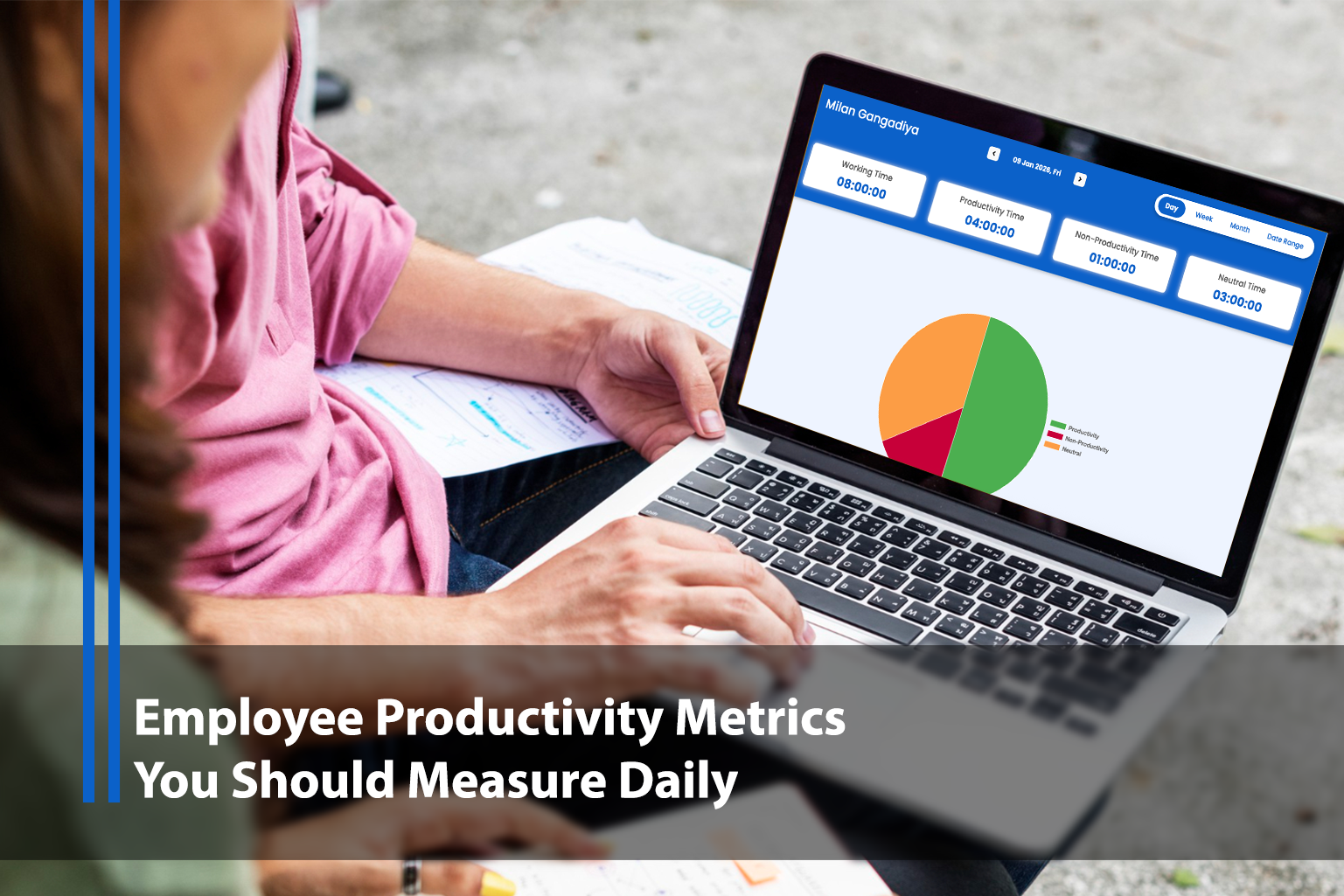
The early days of remote work were defined by a reflexive need to prove existence. Employees felt compelled to respond to messages instantly to signal that they weren't napping or running errands. Companies, in turn, often leaned into surveillance tactics, implementing Employee Monitoring Software to ensure desks were occupied and keyboards were clicking.
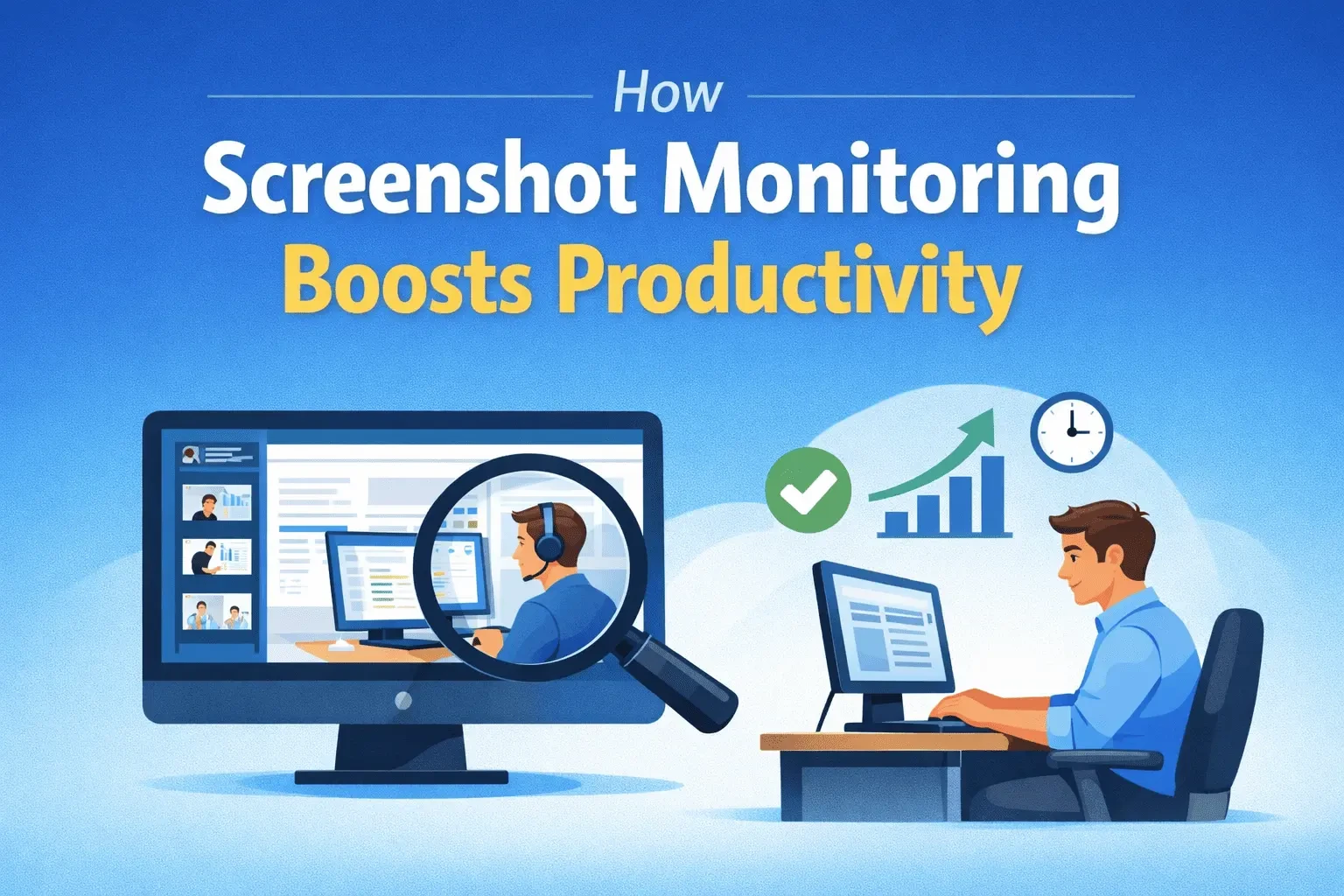
However, by 2026, we have learned a harsh truth: surveillance does not equal strategy. When employees feel they are being tracked by Time Tracking with Screenshots, the psychological contract between employer and employee shifts from one of trust to one of compliance. Instead of focusing on deep, cognitive tasks that move the needle, the team focuses on looking busy. They optimize for "performance" rather than "productivity."
This creates a "performance theater" where the employee is more concerned with the visual evidence of work than the substance of it. When a manager measures success by "green dots" on a messaging app or activity logs, they inadvertently incentivize employees to stay logged in, respond to trivial emails, and attend unnecessary meetings all of which erode the actual capacity for high-quality output.
The Anatomy of 'Busy' Work
How do you distinguish between a team that is genuinely productive and one that is simply "busy"? The symptoms of a busy-but-unproductive culture are distinct and often masquerade as "diligence."
Meeting Overload: The team spends more time coordinating work than doing it. If your calendar is a patchwork of status updates that could have been an asynchronous email, you are in the "busy" trap.
The Notification Treadmill: The team equates speed of reply with quality of output. Constant toggling between tasks to answer instant messages prevents the "Deep Work" state required for complex problem-solving.
Ghost Progress: The team produces dozens of documents, slide decks, and reports, but the core business objectives remain stagnant. This is the hallmark of "busy" work activity that generates no tangible outcome.
True productivity is the result of focused, sustained effort directed toward a clear objective. When a team is busy but not productive, they are usually suffering from a lack of clarity regarding priorities, or they are trapped in a organizational culture that rewards the appearance of work over the results of work.
Productivity as Outcome, Not Input
True productivity in 2026 is defined by clear, measurable outputs. It is about the distance between a problem and its resolution, not the number of hours spent in a chair. To conduct an effective audit of your team, you must shift your focus from tracking inputs to measuring results.
1. Define 'Definition of Done' (DoD)
If your team doesn't have a crystal-clear understanding of what "done" looks like for every project, they will default to "busy." The DoD should be objective. Is the code deployed and passing tests? Is the client proposal signed and finalized? If the metric is subjective, it creates space for the ambiguity that fosters busy-work.
2. Embrace Asynchronous Mastery
The most productive teams in 2026 are those that have largely decoupled time from performance. They prioritize long-form writing, recorded video updates, and centralized documentation. This allows individuals to work in blocks of time that suit their internal clocks rather than adhering to a rigid 9-to-5 that may not be suited for their specific cognitive needs.
3. The Shift in Talent Acquisition
The landscape of Remote Freelance Work has fundamentally altered the competitive landscape. If your internal team is merely performing busy work, you will eventually find that they are being outperformed by independent contractors who are hired specifically for their ability to deliver high-quality, discrete results. When you hire for outcome, you are less concerned with "when" or "how" the work gets done, as long as the quality meets your standards.
The Manager's Role: From Monitor to Enabler
The role of the manager in a distributed team is changing. In a traditional office, managers were often "supervisors" they watched the work happen. In the 2026 model, managers must become "enablers."
Your job is not to track mouse movements. Your job is to:
Remove roadblocks before they become bottlenecks.
Clearly articulate the vision so the team understands the "why" behind the "what."
Protect the team’s time by filtering out unnecessary meetings and administrative overhead.
When managers focus on enabling, they empower their team to take ownership. They shift from a "command and control" style of leadership to one of "context and alignment." This transition is essential for building a high-trust, high-performance environment where people aren't afraid to step away from their screens to actually think or create.
Conducting Your Audit: A Practical Framework
If you are ready to audit your team, start by asking these four questions at your next retrospective:
What is the single most important metric for this role? If you cannot name it in one sentence, you have a measurement problem.
How much time is lost to context switching? Look at the communication logs. Are people being forced to break their concentration for minor updates?
Are we rewarding output or activity? Does the employee who finishes a task in two hours get the same recognition as the one who spends ten hours "working" on the same task?
Is our tooling supporting our goals or distracting from them? Sometimes, the very tools we introduce to "help" are the greatest sources of friction.
By answering these questions honestly, you can identify where the friction is located. Often, the friction isn't coming from the employees themselves, but from the systems and processes that the leadership has put in place.
Moving Beyond the Illusion
The transition to a results-based culture is not easy. It requires a high level of trust, and for many managers, it requires letting go of the ego-driven need to be "in control" of the team's every move.
The future belongs to organizations that treat their employees like professionals. By moving away from the surveillance-based mindset and toward a culture of radical clarity and autonomy, you unlock a level of productivity that the "busy" teams simply cannot touch.
In 2026, the question is no longer about how many hours your employees put in. It is about whether those hours are contributing to the mission. Audit your processes, tighten your feedback loops, and commit to the hard work of building a culture that values the finished product over the performance of effort.
Conclusion: The Path Forward
The remote work revolution was never just about geography. It was about the evolution of work itself. By auditing your current practices, identifying the traps of performative busyness, and realigning your team around concrete outcomes, you are not just improving productivity you are future-proofing your business.
The teams that thrive in 2026 will be those that have learned to balance the need for connection with the imperative of deep, focused work. They will be the teams that value autonomy, clarity, and, above all, results. They will understand that productivity isn't about being busy it's about making progress.
Remember: Being busy is a choice. Being productive is a strategy. Choose wisely.