When teams went remote, a lot of managers discovered an uncomfortable truth: they had been measuring work by proximity. If someone was at their desk, looked busy, and stayed late, they were "productive." Take away the shared office, and that entire signal disappears overnight. The instinctive reaction is to rebuild visibility by watching more closely pinging people constantly, demanding status updates, and in some cases rolling out invasive Employee Monitoring Software that logs every click, screenshot, and keystroke.
The problem is that this approach soothes the manager's anxiety without doing anything for the team's productivity. Micromanagement is one of the fastest ways to erode trust, motivation, and ultimately output. And yet the underlying need is real: you genuinely can't lead a distributed team well if you have no idea how work is actually flowing.
So how do you get the visibility you need without becoming a digital hall monitor? The answer isn't to watch people harder it's to understand work better. This guide walks through a healthier model for tracking remote team productivity: one built on outcomes, transparency, and the right kind of Employee Time Tracking Software, rather than surveillance and suspicion.
Why Micromanaging Backfires (Especially at a Distance)
In an office, micromanagement is annoying but visible you can read the room and dial it back. Remotely, it's amplified and hidden. Every unnecessary check-in lands as a notification that interrupts deep work. Every "just circling back on this" reads as "I don't trust you to do your job." Over weeks, this steady drip of oversight communicates a clear message: we assume the worst about you.
People respond exactly how you'd expect. Some start performing busyness instead of doing work wiggling the mouse, staying green on chat, replying to messages within seconds to prove they're "there." That's activity theater, and it actively competes with the focused, uninterrupted time that real productivity depends on. Others quietly disengage, doing the minimum required to avoid attention. The best performers, the ones with options, simply leave for a company that treats them like adults.
There's a deeper cost, too. Micromanagement keeps decision-making bottlenecked at the manager. When every choice needs sign-off, your team can't move faster than you can review which defeats the entire point of hiring capable people. Autonomy isn't a perk you grant to high performers; it's the mechanism that lets a distributed team scale without you personally touching everything.
Shift the Question: From "Are They Working?" to "Is the Work Working?"
The single most important mindset change is moving from monitoring people to understanding work. These sound similar but lead to completely different tools, metrics, and cultures.
Monitoring people asks: Is this person at their computer right now? It's a presence question, and presence is a terrible proxy for value. A developer who ships a clean feature in four focused hours contributed more than one who spent nine hours context-switching between Slack and half-finished tasks.
Understanding work asks: Where is our time actually going, and is it going to the right things? That reframing matters because it changes what you look at. Instead of surveilling individuals, you study patterns how much of the week gets swallowed by meetings, which projects consistently run over, where handoffs stall, and whether people have enough uninterrupted blocks to do meaningful work at all.
This is also the honest line between heavy-handed Employee Monitoring Software and thoughtful Employee Time Tracking Software. The former is oriented around catching people and defaults to distrust: keystroke logging, constant screenshots, "idle" alarms. The latter is oriented around understanding effort and defaults to transparency: how hours map to projects, where the bottlenecks are, and how workload is distributed across the team. Same category of technology, opposite philosophy and your team can feel the difference within a week of using it.
Start With a Remote Work Audit, Not a Tool
Before you install anything, diagnose the actual problem. A Remote Work Audit is a structured look at how your team really operates day to day, and it almost always surfaces issues that no monitoring tool would have caught because the problem usually isn't that people are slacking. It's that the system around them is leaking time.
A useful Remote Work Audit examines a few core areas:
Where time goes. Map how the working week is actually spent across meetings, focused work, communication, and administrative overhead. Most teams are stunned to learn how little of the week is left for the deep work they were hired to do once meetings and message-triage are subtracted.
Meeting load. Count recurring meetings and ask which ones still earn their place. A standing sync that made sense during a launch may be pure tax three months later. Meetings are the most expensive line item in any knowledge team's budget, and remote work tends to multiply them.
Workflow friction and handoffs. Identify where work stalls waiting on someone else approvals, reviews, unclear ownership, or a single overloaded person everyone depends on. These bottlenecks masquerade as "low productivity" when they're really coordination failures.
Communication norms. Are people expected to be reachable instantly, or is async the default? A culture that rewards immediate replies is a culture that guarantees constant interruption, which is quietly lethal to output.
Tooling and context-switching. How many apps does a typical task touch, and how much time evaporates just moving between them and hunting for information?
The point of a Remote Work Audit is to fix the environment before you scrutinize the individual. When you approach productivity this way, the conversation shifts from "why isn't this person doing enough?" to "what's getting in the way of good work, and how do we remove it?" That framing keeps the focus on the system and it's a far more accurate lens than any per-person activity dashboard.
Choose Time-Tracking Tools — and Use Them the Right Way
Once you understand the terrain, the right Employee Time Tracking Software becomes an ongoing instrument rather than a one-time snapshot. But the tool is only half of it; how you deploy it determines whether it builds trust or destroys it. A few principles keep it on the right side of that line:
Track work, not humans. Configure your Employee Time Tracking Software to map hours to projects, tasks, and clients not to grade individuals on "activity percentages." You want to see that a client engagement is eating twice its budgeted hours, not that someone took a longer lunch on Tuesday.
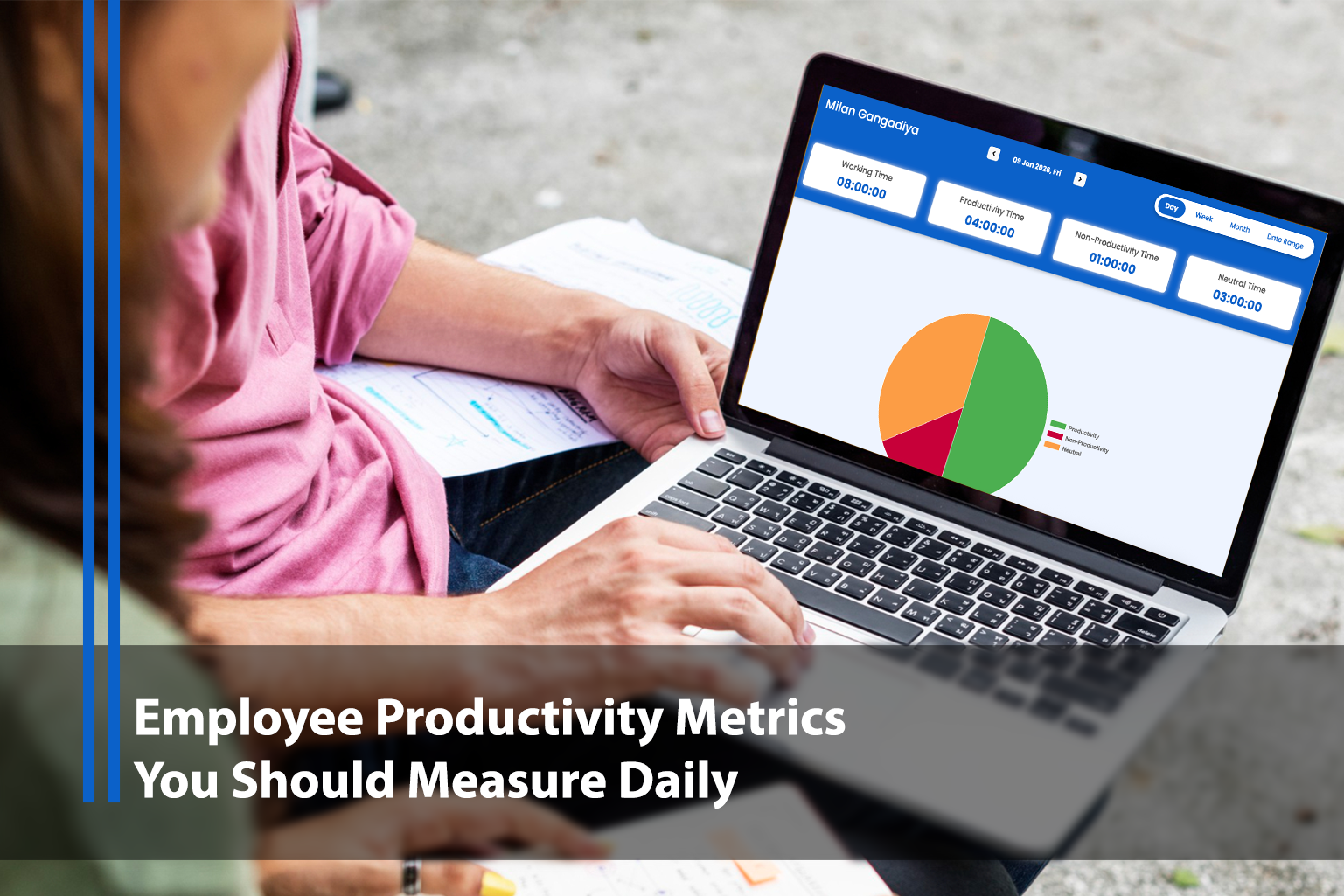
Give people their own data. The strongest signal of good intent is letting employees see their own time and productivity trends. When people can review where their week went, most self-correct without a manager ever raising it. Data that's transparent to the person it describes is a coaching tool; data hidden from them is a weapon. This alone separates modern Employee Time Tracking Software from old-school surveillance-first Employee Monitoring Software.
Look at trends and aggregates, not moments. Zoom out. A single low day means nothing everyone has them. Patterns over weeks tell the real story: chronic overload heading toward burnout, a project consistently blowing its estimate, or a team member who's been quietly buried. Judging people on individual moments is exactly the micromanagement you're trying to escape.
Be radically transparent about what's tracked. Tell your team precisely what the tool captures, what it doesn't, and why it's in place. "We track time against projects so we can staff realistically and stop overloading people" is a message people accept. Secret monitoring, discovered later, poisons trust permanently no amount of productivity data is worth that.
Never use it as a gotcha. The fastest way to turn a healthy tool toxic is to weaponize it in a one-off callout: "I saw you were only active three hours yesterday." Do that once and everyone learns the real purpose is surveillance, and you're right back to activity theater. Use the data to improve workloads and processes, not to ambush people.
Used this way, time tracking stops feeling like a leash and starts feeling like what it should be a shared source of truth that helps the whole team work smarter.
Measure Outcomes, Not Activity Theater
The metrics you choose quietly define the behavior you get. If you reward hours logged and hours online, you'll get people optimizing for looking busy. If you reward outcomes, you get people optimizing for results which is the entire reason productivity matters in the first place.
Lean toward output-based signals: Did the work ship on time and at the expected quality? Are goals and deliverables being met? Are projects landing inside their scope and timeline? Is the customer or stakeholder satisfied with what was produced?
Use activity data the kind your Employee Time Tracking Software surfaces as context, never as the verdict. Time and activity trends are brilliant for spotting when someone is overloaded, when a process is broken, or when work is being distributed unevenly. They're poor as a standalone measure of individual worth. The healthiest setup pairs clear outcome expectations with honest, transparent workload data, so managers can support their teams instead of policing them.
A quick gut check: for any metric you're considering, ask whether a person could game it without actually creating more value. If they can mouse-jigglers, always-online status, padded hours it's an activity-theater metric, and it's steering your team in the wrong direction. Kill it and replace it with something tied to real results.
Build a Culture of Accountability, Not Fear
Tools and metrics only work inside the right culture. You can have the most thoughtful Employee Time Tracking Software on the market and still poison your team if the surrounding management style screams distrust. The goal is accountability that people opt into, not fear they endure.
A few practices make that real:
Set clear expectations up front. Ambiguity is what makes managers reach for surveillance. When goals, deadlines, ownership, and "what good looks like" are explicit, you don't need to hover everyone already knows what they're accountable for.
Default to async and protect focus time. Stop rewarding instant replies. Give people long, uninterrupted blocks to do real work, and let communication happen on a sane cadence. Deep work is where remote teams win; constant interruption is where they lose.
Give the data back to the team. Share aggregate insights openly meeting load, project time trends, workload balance and invite the team to help interpret and improve them. When people are partners in the numbers rather than subjects of them, accountability becomes collective instead of top-down.
Coach with the data, don't punish with it. When time tracking reveals someone is overloaded or a process is broken, respond with support: rebalance the work, remove the bottleneck, adjust the timeline. Every time you use the data to help, you reinforce that it's a tool for the team's benefit, not a trap.
Trust first, verify gently. Extend trust as the default and treat your tracking as a light safety net rather than a spotlight. The overwhelming majority of people want to do good work; build your system for them, not for the rare exception, and address individual issues individually.
The Bottom Line
Tracking remote team productivity and micromanaging your team are not the same thing they're opposites. Micromanagement watches people and assumes the worst. Real productivity tracking studies work and assumes the best, using clear outcomes and transparent data to help a distributed team do its best work.
The path is straightforward. Start with a Remote Work Audit to understand where time and momentum are actually leaking. Layer in the right Employee Time Tracking Software the transparent, project-oriented kind, not surveillance-first Employee Monitoring Software and use it to illuminate patterns rather than police moments. Measure outcomes over activity, and wrap it all in a culture of trust and shared accountability.
Get that combination right and you stop choosing between visibility and trust. You get both: a team that owns its work, and a leader who finally has the insight to support them without ever looking over their shoulder.