Why Workforce Analytics Has Become a Growth Engine
Scaling a company used to feel like adding more chairs to a crowded dinner table. You hired more people, bought more tools, opened more roles, and hoped the extra hands would turn into extra growth. Sometimes it worked. Sometimes it just created more meetings, more confusion, more handoffs, and a payroll bill that grew faster than revenue. That is why workforce analytics has moved from being a "nice-to-have HR dashboard" to a serious business growth engine. When leaders understand how people spend time, where work gets stuck, which teams are overloaded, and which roles produce the highest business impact, they stop guessing and start scaling with intention.
The real magic of workforce analytics is not just the data itself. Data sitting in a dashboard is like ingredients sitting on a kitchen counter. Useful? Sure. A meal? Not yet. The value appears when teams connect people data to business outcomes: revenue growth, delivery speed, customer satisfaction, quality, retention, hiring accuracy, and operational cost. That is where the ROI of workforce analytics becomes clear. It helps leaders answer questions they used to debate endlessly in meetings. Are we understaffed, or are we poorly organized? Do we need another hire, or do we need to remove a bottleneck? Is a team underperforming, or is the workload unrealistic? Are managers coaching people effectively, or are they flying blind?
Data-driven teams scale faster because they see reality earlier. They do not wait until burnout becomes resignations, missed deadlines become lost clients, or inefficient workflows become expensive restructuring. They notice patterns while there is still time to act. Workforce analytics gives companies a kind of organizational night vision. It helps them spot weak signals before they become loud problems. And in competitive markets, that early visibility matters. The companies that grow sustainably are rarely the ones that simply hire the fastest. They are the ones that learn the fastest. Workforce analytics turns everyday work into insight, and insight into better decisions. That is how scaling becomes less chaotic, less emotional, and far more profitable.
Why Traditional Timesheets Are Failing
What Workforce Analytics Really Means
Workforce analytics is the practice of collecting, connecting, and interpreting employee-related data to improve business decisions. That sounds formal, but in plain language, it means understanding how work actually happens inside an organization. It looks at things like productivity, staffing levels, employee engagement, turnover risk, hiring quality, workload balance, time allocation, performance trends, absenteeism, manager effectiveness, skills gaps, and team capacity. The goal is not to spy on employees or reduce people to numbers. Done properly, workforce analytics helps companies build healthier, fairer, and more efficient workplaces where people can do their best work without drowning in chaos.
A common mistake is thinking workforce analytics belongs only to HR. It does not. HR may own a large part of the data, but the insights touch every part of the business. Finance cares because workforce costs are often one of the largest expenses in a company. Operations cares because people capacity affects delivery speed and service quality. Sales cares because rep productivity and ramp time influence revenue. Customer success cares because workload balance affects response times and client satisfaction. Executives care because every strategic plan eventually runs into the same question: do we have the right people, in the right roles, doing the right work, at the right time?
The difference between basic reporting and true workforce analytics is depth. A report might tell you employee turnover was 18% last year. Analytics asks why it happened, which departments were most affected, whether manager behavior played a role, how long it takes to replace those employees, and what that turnover cost the company. A report says average utilization is high. Analytics asks whether high utilization is healthy productivity or a warning sign for burnout. A report shows headcount increased. Analytics asks whether business output increased with it. That is the shift: from counting people to understanding performance systems. When companies make that shift, their workforce stops being treated as a fixed cost center and starts becoming a measurable source of competitive advantage.
From Gut Feeling to Evidence-Based Decisions
Most organizations are full of gut feelings. A manager says the team is overwhelmed. A finance leader says productivity seems low. A department head says they need five more people. An executive says remote work is hurting collaboration. None of these claims may be wrong, but without data, they are just opinions wearing business clothes. Workforce analytics does not eliminate judgment; it improves it. It gives leaders a clearer mirror so they can see whether their assumptions match what is actually happening. That matters because decisions about people are some of the most expensive decisions a company makes.
Think about hiring. Without analytics, hiring often becomes reactive. A team complains loudly, so it gets headcount. Another team quietly absorbs extra work, so its pain stays invisible. One department hires aggressively because it has a persuasive leader, while another struggles because its needs are harder to explain. Workforce analytics brings structure to that conversation. It can show workload trends, output per role, time-to-productivity, turnover patterns, and capacity constraints. Suddenly, hiring decisions are not based on who makes the strongest argument in a meeting. They are based on evidence.
The same applies to performance management. In many companies, performance reviews are influenced by memory, visibility, personality, and recent events. The person who speaks up in meetings may appear more productive than the person quietly solving difficult problems. The employee who works late may seem more committed than the employee who finishes efficiently during normal hours. Analytics helps reveal the difference between activity and impact. It allows managers to look at outcomes, collaboration patterns, goal progress, quality indicators, and workload context. That does not mean every decision should be automated. People are too complex for that. But it does mean leaders can make fairer, smarter decisions with fewer blind spots.
Evidence-based workforce decisions also create trust when communicated properly. Employees usually do not mind data when it is used to remove obstacles, improve fairness, and support growth. They resist it when it feels secretive, punitive, or disconnected from reality. That is why transparency is so important. Leaders should explain what data is being used, why it matters, and how it will improve the employee experience. When workforce analytics is framed as a tool for better decisions rather than a weapon for control, it becomes much easier for teams to accept and benefit from it.
The Data-Driven Team's Edge
Data-driven teams move faster because they spend less time arguing about what is happening. They may still debate what to do, but they are not trapped in endless disagreement over basic facts. That creates a major scaling advantage. As companies grow, complexity grows with them. More employees mean more workflows, more communication channels, more managers, more dependencies, and more chances for work to get lost in the cracks. Without analytics, leaders often discover problems only after performance drops. With analytics, they can see pressure building before the system breaks.
One of the biggest advantages is focus. Growing teams are constantly surrounded by noise. There are urgent requests, competing priorities, new initiatives, customer issues, hiring needs, and internal projects. Workforce analytics helps separate signal from noise. It can show which teams are spending too much time on low-value work, which processes create repeated delays, which roles are overloaded, and which projects are consuming resources without producing meaningful outcomes. That kind of visibility helps leaders say no with confidence. And saying no is one of the most underrated skills in scaling.
Another edge is speed of learning. A data-driven team can run an operational change, measure its effect, and adjust quickly. For example, if a company changes its onboarding process, analytics can show whether new hires reach productivity faster. If a support team changes its staffing model, analytics can show whether response times improve without increasing burnout. If a manager coaching program is introduced, analytics can show whether retention, engagement, or performance trends shift. This creates a feedback loop. The company does not simply make changes and hope for the best. It learns from each change.
Data-driven teams also become better at protecting their people. That may sound soft, but it has hard financial value. Burnout, attrition, disengagement, and poor manager support are expensive. When analytics highlights workload imbalance, declining engagement, or repeated overtime, leaders can intervene earlier. They can redistribute work, clarify priorities, add support, or adjust unrealistic goals. Healthy teams are not just happier; they are more consistent, creative, and resilient. In other words, workforce analytics helps companies scale without turning growth into a pressure cooker.
The ROI Case for Workforce Analytics
The ROI of workforce analytics comes from one simple idea: better people decisions create better business outcomes. Since people-related costs are often a major share of company spending, even small improvements can create meaningful returns. A company does not need a massive transformation to see value. Reducing unnecessary overtime, improving retention, shortening hiring cycles, increasing productivity, and preventing burnout can all produce measurable financial benefits. The challenge is that many leaders underestimate these gains because they are spread across different departments. Savings may appear in finance, productivity gains in operations, retention gains in HR, and revenue impact in sales. Workforce analytics connects those dots.
A strong ROI case starts by identifying the problems analytics is meant to solve. This is where many companies go wrong. They buy dashboards before defining decisions. They collect data before agreeing on business outcomes. They track metrics because they can, not because they should. A better approach is to ask practical questions. Where are we losing money because of workforce inefficiency? Which teams are struggling to meet demand? Where is turnover most costly? Which roles take too long to ramp? Which processes slow people down? Which managers need support? Once those questions are clear, analytics becomes focused and valuable.
The financial return can show up quickly in operational areas. For example, if analytics reveals that high-value employees are spending too much time on administrative tasks, leaders can automate, delegate, or redesign workflows. If data shows certain shifts or teams are consistently overstaffed while others are stretched thin, schedules can be adjusted. If turnover risk is rising in a critical department, leaders can address the issue before losing expensive talent. Each improvement may seem modest alone, but together they create compounding returns. That is the quiet power of workforce analytics. It does not always create one dramatic "aha" moment. More often, it improves dozens of decisions that slowly reshape the economics of the business.
Direct Financial Returns You Can Measure
Direct ROI is the easiest place to start because it ties workforce analytics to visible financial outcomes. These are the returns that show up in budgets, payroll efficiency, hiring costs, overtime spending, productivity levels, and revenue per employee. For example, reducing turnover in a high-skill role has an obvious financial benefit. Replacing an employee can involve recruiting fees, interview time, onboarding costs, lost productivity, manager effort, and knowledge loss. If analytics helps identify why people leave and allows the company to reduce preventable attrition, that saving can be estimated with reasonable accuracy.
Overtime reduction is another direct return. Many companies treat overtime as a normal cost of doing business, but analytics often reveals patterns that can be fixed. Maybe one team is overloaded because work is poorly distributed. Maybe scheduling does not match demand. Maybe approvals are slow, causing last-minute rushes. Maybe a few high performers are carrying too much because managers trust them more than others. When workforce analytics reveals these patterns, leaders can make smarter staffing and workflow decisions. The result is not just lower overtime cost. It is also less fatigue and better quality of work.
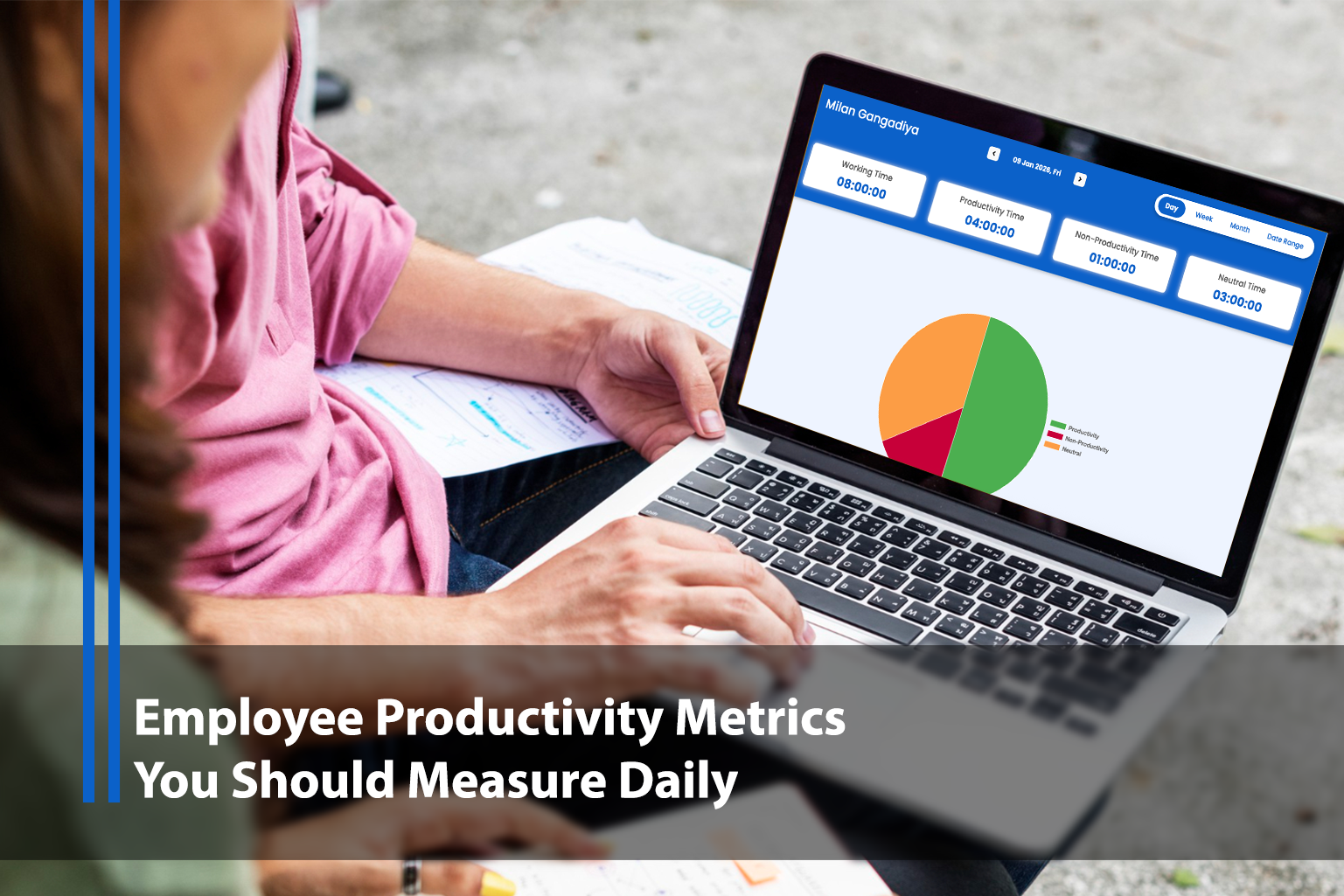
Productivity gains may be even more powerful. If a team of 100 people improves productive output by just a small percentage, the financial value can be substantial. The key is measuring productivity carefully. It should not mean squeezing more minutes out of people like toothpaste from a tube. True productivity is about removing friction so people can spend more time on meaningful work. That may involve reducing unnecessary meetings, simplifying approvals, improving role clarity, automating repetitive tasks, or balancing workloads. In this context, tools such as Employee Timesheet Software, Track Employee Productivity can help leaders understand time allocation and operational patterns, but the real ROI comes from using that insight to improve systems rather than micromanage individuals.
Direct returns can also include faster hiring and better workforce allocation. If analytics shows which hiring sources produce stronger long-term employees, recruiting budgets can be spent more wisely. If data reveals which roles generate the highest business impact, leaders can prioritize headcount where it matters most. If workforce planning helps avoid overhiring, the company preserves cash. If it prevents underhiring in a revenue-critical area, it protects growth. These are not abstract benefits. They influence profit, cash flow, delivery speed, and competitive strength.
Indirect Returns That Compound Over Time
Indirect returns are harder to measure, but they often create the deepest long-term value. These include better employee experience, stronger manager effectiveness, higher trust, improved collaboration, reduced burnout, better succession planning, and a healthier culture. They may not show up immediately on a spreadsheet, but they shape the company's ability to scale. A business can survive short bursts of chaos. It cannot scale sustainably if its best people are exhausted, its managers are inconsistent, and its teams do not know where their time goes.
One major indirect return is better retention of high performers. Losing an average employee is expensive. Losing a top performer can be devastating. High performers often carry institutional knowledge, mentor others, solve complex problems, and set the pace for the team. Workforce analytics can help detect early warning signs that valuable employees may be at risk. These signs might include workload spikes, declining engagement survey scores, reduced internal mobility, stalled career progression, or repeated manager changes. When leaders notice these signals early, they can have better conversations and offer better support.
Another indirect return is improved manager quality. Managers are the transmission system of a company. Strategy flows through them, culture is shaped by them, and employee experience is heavily influenced by them. Workforce analytics can reveal where managers may need coaching. For example, one team may have unusually high turnover, low engagement, poor goal completion, or heavy overtime compared with similar teams. That does not mean the manager is bad. It means there is something worth understanding. Maybe the team has harder work, fewer resources, unclear priorities, or a manager who needs better training. Analytics gives leaders the evidence needed to support managers instead of simply blaming them.
Culture also benefits when decisions become more consistent. Employees notice when promotions feel random, workloads feel unfair, or hiring decisions seem disconnected from reality. Analytics can help reduce these perceptions by making patterns visible. It supports fairer workload distribution, more objective talent reviews, and better development planning. Over time, that builds credibility. People may not always agree with every decision, but they are more likely to trust a company that can explain its choices with clarity and evidence. That trust becomes a scaling advantage because trust lowers friction. And when friction goes down, speed goes up.
A Simple Workforce Analytics ROI Formula
A practical ROI formula helps leaders move workforce analytics from vague promise to business case. The simplest version is: ROI = (Financial Gain from Workforce Analytics − Cost of Workforce Analytics) ÷ Cost of Workforce Analytics × 100. The cost side should include software, implementation, training, data integration, employee communication, and ongoing administration. The gain side should include measurable improvements such as reduced turnover, lower overtime, faster hiring, improved productivity, better utilization, and reduced absenteeism. While the formula is simple, the thinking behind it should be thoughtful.
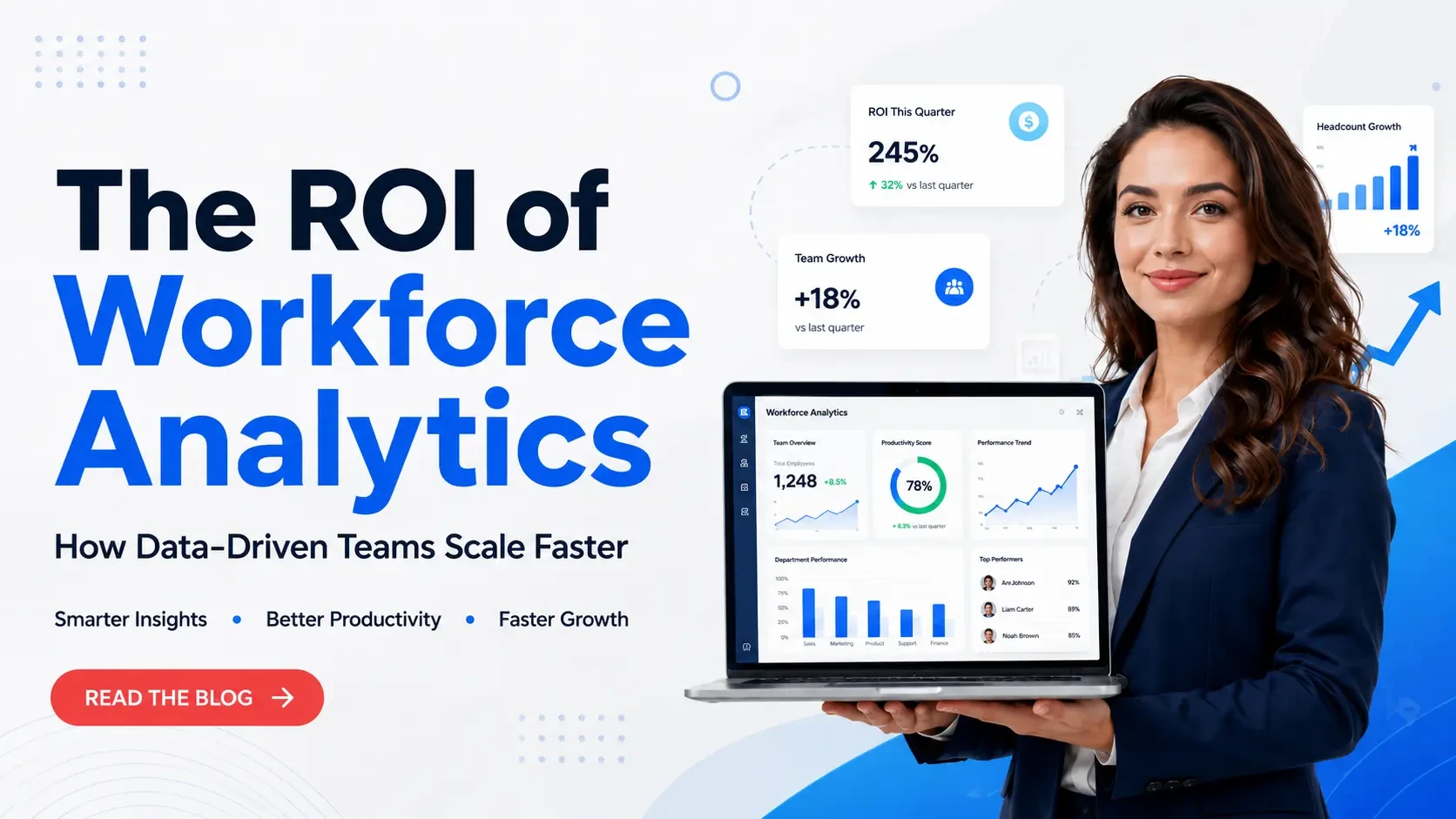
Here is a basic example. Suppose a company invests $80,000 in workforce analytics tools, training, and implementation. Over the next year, it reduces preventable turnover in a critical department, saving an estimated $150,000 in replacement and productivity costs. It also reduces overtime by $60,000 and improves capacity planning enough to avoid one unnecessary hire costing $90,000 in salary and overhead. The total measurable gain is $300,000. Subtract the $80,000 investment, divide by $80,000, and multiply by 100. The ROI would be 275%. Real life is usually messier than that, but this kind of model gives leaders a grounded way to evaluate value.
The best ROI models include both conservative and optimistic scenarios. Conservative models build credibility because they avoid inflated claims. Leaders should start with a few high-confidence use cases rather than trying to prove everything at once. For example, begin with turnover reduction in one department, overtime control in another, or productivity improvement in a specific workflow. Measure the baseline, introduce changes, track outcomes, and refine the model. This turns workforce analytics into a business discipline rather than a one-time project. Over time, the organization builds its own evidence library, making future investment decisions easier and more accurate.
How Workforce Analytics Helps Teams Scale Faster
Scaling faster does not mean hiring recklessly or pushing people harder. It means increasing output, capability, and market reach without letting complexity crush the organization. Workforce analytics helps because it shows where growth is being slowed by people-related bottlenecks. Sometimes the bottleneck is obvious, like a team with too much work and too few people. Other times it is hidden, like unclear ownership, slow approvals, poor onboarding, weak manager training, or misaligned skills. Without analytics, leaders may misdiagnose the problem and throw headcount at issues that need process redesign.
A scaling company must answer three questions again and again. Who do we need? Where do we need them? How do we help them perform quickly? Workforce analytics improves all three answers. It can show which roles are most connected to revenue, customer satisfaction, product delivery, or operational stability. It can reveal where current employees have underused skills. It can identify departments where workload is rising faster than headcount. It can also expose where new hires are taking too long to ramp, which may point to onboarding gaps or unclear role expectations.
The speed advantage comes from reducing lag. In a traditional organization, leaders often react after the damage is visible. They hire after deadlines are missed. They address burnout after resignations arrive. They improve onboarding after months of poor new-hire productivity. They fix manager issues after engagement scores collapse. Workforce analytics shortens that reaction time. It turns lagging indicators into earlier signals. That allows leaders to make smaller, smarter adjustments before problems become expensive.
Scaling also requires consistency. A small team can survive on personal relationships and informal communication. A larger team cannot. As the company grows, decisions need clearer systems. Workforce analytics gives those systems a factual backbone. It helps leaders standardize what good performance looks like, how workload is assessed, how staffing needs are justified, and how employee risks are detected. This does not remove the human side of leadership. It strengthens it. Good leaders still listen, coach, and use judgment. Analytics simply gives them a better map.
Smarter Hiring and Workforce Planning
Hiring is one of the biggest levers in scaling, but it is also one of the easiest to get wrong. Hire too slowly, and teams become overloaded. Hire too quickly, and the company burns cash while adding complexity. Hire the wrong people, and performance problems multiply. Workforce analytics helps leaders move beyond reactive hiring by connecting headcount plans to business demand, productivity trends, skills gaps, and future growth scenarios. Instead of asking, "Who is complaining the loudest?" leaders can ask, "Where will an additional person create the greatest business return?"
Smarter hiring begins with understanding current capacity. A team may ask for more people because it feels busy, but busyness is not always the same as strategic need. Analytics can show whether the team is spending time on high-value work, whether workload has truly increased, whether certain processes are inefficient, and whether existing skills are being used well. Sometimes the answer is to hire. Sometimes the answer is to automate, outsource, retrain, or reorganize. This distinction matters because every hire adds cost and coordination. Hiring should solve the right problem, not hide the wrong one.
Workforce planning also improves when companies analyze skills, not just job titles. Job titles can be misleading. Two people with the same title may have very different abilities, and two people in different departments may share valuable skills. Analytics can help map existing capabilities and identify future gaps. For example, a company preparing to expand into a new market may need more data analysis, compliance knowledge, customer onboarding expertise, or technical support capacity. By identifying gaps early, leaders can decide whether to hire externally, develop internal talent, or redesign roles.
Better workforce planning makes growth feel less frantic. When leaders can forecast staffing needs based on actual workload and business goals, they avoid last-minute hiring scrambles. They can build talent pipelines earlier, improve onboarding resources, and prepare managers for team expansion. This creates a smoother employee experience too. New hires join teams that are ready for them, not teams that are drowning and hoping a new person will magically fix everything. That difference affects ramp time, morale, and retention.
Better Capacity Planning Before Teams Burn Out
Capacity planning is where workforce analytics often delivers immediate value. Many companies do not truly know how much work their teams can handle. They know deadlines, projects, and headcount, but they do not always know the real load sitting on people's shoulders. This creates a dangerous gap. Leaders keep approving new initiatives because each one seems reasonable on its own. But inside the team, those "reasonable" requests pile up like bricks in a backpack. Eventually, people slow down, quality drops, frustration rises, and good employees start looking for the exit.
Workforce analytics helps reveal capacity before burnout becomes visible. It can show workload distribution, overtime patterns, project demand, meeting load, task completion trends, and staffing coverage. This matters because burnout is often treated as a personal resilience issue when it is really a system design issue. Telling employees to manage stress better does not fix unrealistic workloads. Data gives leaders the courage to confront the real problem: too much work, too little clarity, too many priorities, or too few resources.
Good capacity planning also improves prioritization. When leaders see the actual limits of a team, they are forced to make trade-offs. That may sound uncomfortable, but it is healthier than pretending everything can be done at once. Analytics can help leaders compare demand against available capacity and decide which projects deserve attention now, which should wait, and which should be stopped entirely. This protects employees from priority overload. It also protects the business from half-finished work that consumes energy without delivering value.
The ROI is both human and financial. Overloaded teams make more mistakes, miss more deadlines, and lose more people. Replacing burned-out employees is expensive. Repairing damaged customer relationships is expensive. Reworking poor-quality output is expensive. Capacity planning reduces those costs by making workload visible and manageable. It turns leadership from emergency response into traffic control. Instead of waiting for collisions, leaders can adjust the flow of work before the pileup happens.
Stronger Manager Decisions Across the Business
Managers make hundreds of small decisions that shape business performance. They assign work, coach employees, approve time off, handle conflict, prioritize projects, evaluate performance, and translate strategy into daily action. When managers lack good data, they rely heavily on instinct and personal observation. That can work in small teams, but it becomes unreliable as organizations grow. Workforce analytics gives managers a clearer view of their teams so they can lead with more fairness, confidence, and precision.
One powerful use case is workload management. A manager may believe work is evenly distributed because no one is complaining. Analytics may show something different. One employee may be carrying the most complex tasks. Another may be underutilized. A third may be spending too much time in meetings and too little time on focused work. With this insight, managers can rebalance assignments before resentment builds. They can also recognize invisible contributions that might otherwise go unnoticed.
Analytics also improves coaching. Instead of giving vague feedback like "be more proactive" or "improve productivity," managers can have more specific conversations. They might discuss project cycle times, collaboration patterns, goal progress, customer feedback, or skill development. Specific feedback is more useful because it gives employees something concrete to work with. It also reduces defensiveness. A conversation grounded in observable patterns is usually more productive than one based on general impressions.
Manager accountability becomes stronger too. Senior leaders can use workforce analytics to identify where teams are thriving and where support is needed. This should not become a blame game. The best organizations use analytics to ask better questions, not to shame managers. Why does one team have stronger retention? What can others learn from that manager? Why is another team showing high overtime and low engagement? Does the manager need help, or is the team under-resourced? When used with curiosity, workforce analytics turns management into a learnable, improvable discipline. That is essential for scaling because great companies cannot depend on a few heroic managers. They need leadership quality across the whole organization.
Key Metrics That Reveal Workforce Performance
Not every metric deserves attention. One of the fastest ways to ruin workforce analytics is to track too many numbers and call it insight. A dashboard packed with charts can look impressive while helping no one make better decisions. The best metrics are tied to business questions. They help leaders understand performance, capacity, risk, and employee experience. They also need context. A number by itself can mislead. High utilization may mean strong productivity, or it may mean burnout risk. Low turnover may mean stability, or it may mean employees feel stuck. Data needs interpretation.
The most useful workforce metrics usually fall into a few categories: productivity, utilization, time allocation, attendance, hiring, retention, engagement, skills, and manager effectiveness. Together, they create a more complete picture of how work gets done. No single metric should dominate the conversation. When companies obsess over one number, people naturally optimize for that number, sometimes in unhealthy ways. For example, if a company only tracks hours worked, employees may appear busy without creating meaningful outcomes. If it only tracks output, it may ignore quality or sustainability. Balanced measurement protects against these distortions.
A strong metric system should also separate team-level insight from individual surveillance. Leaders need visibility, but employees need dignity and trust. Workforce analytics works best when it focuses on patterns, systems, and decisions rather than constant personal monitoring. The question should be, "How do we improve the way work happens?" not "How do we catch people doing something wrong?" This distinction changes everything. It affects the tools companies choose, the policies they write, and the way employees respond.
Metrics should lead to action. If leaders track engagement but never address concerns, employees stop believing surveys matter. If they track productivity but never remove blockers, the data becomes noise. If they track turnover but never improve manager support, the trend continues. Every metric should have an owner, a review rhythm, and a decision attached to it. Otherwise, workforce analytics becomes business theater: lots of charts, little change.
Productivity and Utilization Metrics
Productivity metrics help companies understand how effectively work turns into outcomes. But productivity is tricky because not all work is easy to measure. A sales team may have clear revenue numbers. A support team may have ticket resolution times. A software team may have delivery cycles. A strategy team, creative team, or operations team may produce value in ways that are harder to quantify. That does not mean productivity cannot be measured. It means leaders need thoughtful metrics that match the nature of the work.
Utilization is one common measure. It shows how much available capacity is being used for productive or billable work. In professional services, for example, utilization can directly affect profitability. But high utilization is not always good. A team operating at 95% utilization for too long may have no room for learning, innovation, documentation, or recovery. It may look efficient right before it becomes fragile. Healthy utilization leaves space for the unexpected. A car engine can run at maximum speed, but you would not want to drive that way every day.
Productivity should also be connected to quality. More output is not useful if errors increase. A support agent who closes many tickets but leaves customers unhappy is not truly productive. A developer who ships quickly but creates unstable code is creating future cost. A recruiter who fills roles fast but produces poor hiring matches is not helping the business scale. That is why productivity metrics should be paired with quality indicators, customer feedback, rework rates, goal completion, or peer review.
The best productivity analytics helps teams remove friction. It may reveal that employees spend too much time switching between tools, waiting for approvals, attending unnecessary meetings, or redoing work because expectations were unclear. These are not employee motivation problems. They are workflow design problems. When leaders fix them, productivity rises naturally. People do not need to be squeezed harder; they need a cleaner path to meaningful work.
Time, Attendance, and Workflow Visibility
Time and attendance data can reveal important patterns, but it must be handled carefully. At its best, this data helps leaders understand staffing coverage, workload balance, scheduling accuracy, absenteeism trends, overtime risks, and operational bottlenecks. At its worst, it becomes a blunt instrument that makes employees feel watched instead of supported. The difference is intent. When time data is used to improve planning and fairness, it creates value. When it is used to punish normal human behavior, it damages trust.
Workflow visibility is especially important in growing teams because work often becomes fragmented. People may be busy all day without making progress on the most important priorities. Meetings multiply. Notifications interrupt deep work. Projects move through too many approval layers. Employees spend time searching for information, clarifying ownership, or fixing preventable mistakes. Analytics can reveal these hidden costs. Once leaders see them, they can redesign workflows to reduce wasted effort.
Attendance trends can also provide early signals. Rising absenteeism may point to illness, burnout, disengagement, scheduling problems, or personal stress. A single absence means little. A pattern deserves attention. Similarly, repeated overtime can indicate demand growth, poor planning, understaffing, or inefficient processes. Leaders should not jump to conclusions. They should use the data as a prompt for better conversations. The goal is to understand what is happening, not to make lazy assumptions.
Time-related analytics becomes more valuable when paired with outcomes. Hours alone do not prove impact. Someone can work long hours and produce little value, while another person can deliver excellent results efficiently. That is why companies should avoid worshiping busyness. The healthier question is: how is time being converted into meaningful progress? When leaders answer that question, they can protect focus, improve scheduling, and reduce wasted effort. In a scaling company, time is not just a resource. It is the raw material from which growth is built.
Engagement, Retention, and Employee Experience Signals
Engagement and retention metrics show whether the organization is healthy enough to sustain growth. A company can hit short-term targets while quietly draining its people. That is like building a house on wet concrete; it may stand for a while, but the foundation is not ready. Workforce analytics helps leaders see whether employees feel supported, whether managers are effective, whether career paths are clear, and whether people are likely to stay. These signals matter because scaling requires continuity. Constant churn slows everything down.
Engagement surveys are useful, but they should not be treated as the only truth. Employees may hold back if they do not trust the process. Scores can rise or fall because of recent events. Different teams may interpret questions differently. The best approach is to combine survey results with other signals, such as turnover trends, internal mobility, absenteeism, manager changes, workload patterns, and performance data. When several signals point in the same direction, leaders can act with greater confidence.
Retention analytics is especially valuable when it identifies preventable turnover. Not every resignation can or should be prevented. People leave for many reasons, including personal goals, relocation, career changes, or better opportunities. But if a company sees repeated departures from the same team, role, manager, location, or tenure group, there is likely a fixable issue. Maybe compensation is misaligned. Maybe the work is poorly designed. Maybe promotions are unclear. Maybe managers need support. Analytics helps leaders stop treating exits as isolated surprises and start seeing the patterns behind them.
Employee experience signals also help companies invest in the right improvements. Without data, leaders may spend money on perks that do not address real problems. A company might offer snacks, events, or wellness apps when employees actually need clearer priorities, better tools, fairer workloads, or career development. Workforce analytics keeps the focus on what matters. It listens to the organization at scale. And when leaders act on those insights, employees notice. That response "they actually listened" can do more for engagement than any polished culture campaign.
A Practical Roadmap for Implementing Workforce Analytics
Implementing workforce analytics should start small, clear, and practical. Many companies try to build the perfect analytics system from day one, then get buried under data integration problems, privacy concerns, metric debates, and tool complexity. A better path is to choose a few high-value business questions and build from there. For example: Why is turnover rising in customer support? Where are teams overloaded? Which hiring channels produce the strongest employees? Why is project delivery slowing? Which departments have the highest overtime risk? These questions give the analytics program a purpose.
The first step is aligning stakeholders. HR, finance, operations, IT, legal, and business leaders should agree on goals, data sources, privacy rules, and decision rights. This alignment matters because workforce data is sensitive. Employees need to know the company is using data responsibly. Clear governance should define what data is collected, who can access it, how it is protected, and how insights will be used. Trust is not a side issue. It is the foundation of the whole program.
The second step is building a reliable data foundation. Workforce analytics often pulls from HR systems, payroll, time tracking, performance tools, engagement surveys, recruiting platforms, learning systems, and project management software. The data does not need to be perfect at the start, but it does need to be understood. Leaders should know where data is incomplete, inconsistent, or biased. Bad data can lead to bad decisions, so quality checks are essential. This is not glamorous work, but it is the plumbing behind every useful dashboard.
The third step is turning insights into action. This is where many analytics efforts fail. A company may produce excellent reports, but nothing changes. To avoid that, every insight should connect to an owner and a decision. If turnover risk is rising, who investigates? If workload is uneven, who rebalances it? If onboarding is slow, who redesigns the process? Analytics only creates ROI when it changes behavior. The final step is continuous improvement. Review outcomes, refine metrics, gather employee feedback, and expand use cases gradually. Workforce analytics is not a one-time installation. It is a management habit.
Conclusion
The ROI of workforce analytics is not just about saving money, although it can absolutely do that. Its deeper value is helping companies scale with sharper vision and fewer expensive surprises. Growth creates complexity, and complexity punishes guesswork. When leaders do not understand how work happens, they overhire, under-support teams, miss early burnout signals, tolerate inefficient workflows, and make people decisions based on instinct alone. Workforce analytics changes the game by turning scattered workforce data into practical business intelligence.
Data-driven teams scale faster because they learn faster. They see which roles drive value, where capacity is strained, which managers need support, which employees may be at risk, and which processes waste time. They do not wait for problems to become obvious. They act while the signals are still small. That early action is where much of the ROI lives. Preventing one wave of turnover, avoiding one unnecessary hiring spree, reducing one chronic bottleneck, or improving one broken onboarding process can create returns that far exceed the cost of analytics.
The companies that benefit most are not the ones with the fanciest dashboards. They are the ones with the clearest questions, the strongest trust, and the discipline to act on what they learn. Workforce analytics should never strip the humanity out of work. It should do the opposite. It should help leaders understand people's reality more clearly, support them more effectively, and build systems where good work is easier to do. When used responsibly, workforce analytics becomes more than an HR tool. It becomes a scaling strategy, a financial advantage, and a better way to lead.